en
en 


Call
+8613406350006


In August 2024, the HXH Steel warehouse and logistics team completed a pre-shipment inspection for a batch of 304 stainless steel pipes scheduled for delivery to Saudi Arabia. Before dispatching the cargo to the port, our team carried out dimensional checks on selected bundles to verify that the products matched the order specifications and accompanying mill documentation.
These pipes are intended for industrial piping and fluid transportation applications, where dimensional accuracy and material traceability are important requirements during installation and project acceptance.
For this shipment, the inspection concentrated on physical measurements and product identification rather than relying solely on the Mill Test Certificate (MTC).
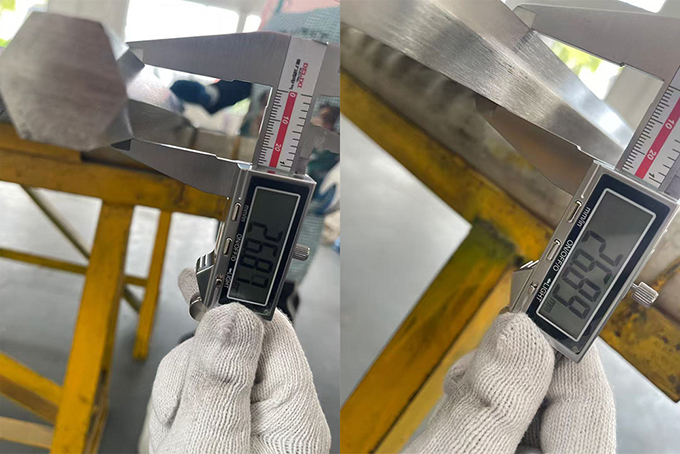
Using calibrated vernier calipers and micrometers, warehouse inspectors conducted random sampling inspections on packaged bundles.
Measurements were taken at multiple locations on the pipe ends to verify the actual outer diameter and wall thickness. The recorded values were checked against the dimensional tolerances specified in the applicable ASTM standard and purchase order requirements.
Wall thickness verification is particularly important for piping systems operating under pressure, as dimensional deviations can affect fabrication and service performance.
The fixed length of selected pipes was measured to confirm compliance with contract requirements. Length accuracy helps reduce adjustment work during field installation and supports efficient fit-up and welding on site.
Inspectors checked the markings stamped on the pipe surface, including steel grade identification, dimensions, and heat numbers. These markings were cross-verified against the packing list and Mill Test Certificates to ensure full material traceability throughout the shipment.
Pre-shipment dimensional verification helps identify potential mix-ups before cargo leaves the warehouse. Confirming wall thickness, pipe dimensions, and material identification in advance reduces the risk of receiving non-conforming products at the project site and helps maintain smooth installation progress after delivery.
Inspection records were documented and retained as part of the shipment quality control process.
Following inspection approval, the 304 stainless steel pipes were bundled with steel straps and fitted with plastic end caps to protect the pipe ends during handling and transport. The bundles were wrapped with moisture-resistant export packaging materials to reduce the risk of surface contamination and corrosion during ocean transportation.
After final tagging and loading preparation, the shipment was released for transport to the port and onward delivery to Saudi Arabia.