en
en 





Call
+8613406350006


This week, domestic seamless pipe prices remained stable, with the weekly average holding flat. Raw material prices rose by 10–20 yuan/ton, maintaining a level of cost-side support. Most pipe mills have continued their "one-case-one-negotiation" pricing strategy for individual orders, while the broader market remains in a cautious "wait-and-see" mode due to the deepening seasonal off-peak.
On the macro level, Governor Pan Gongsheng of the People's Bank of China stated that the central bank will continue implementing an appropriately loose monetary policy in 2026. He emphasized that promoting stable economic growth and a reasonable recovery in price levels are key considerations, noting that there is still room for further cuts to interest rates and reserve requirement ratios (RRR) this year. In the market, futures fluctuated initially before returning to fundamentals, leaving seamless pipe prices overall unchanged. As the Lunar New Year (starting Feb 15, 2026) approaches, demand has significantly contracted, with many regions entering holiday mode. While the South saw some sporadic transactions, the growth was negligible. Consequently, seamless pipe prices are expected to remain stable next week.
Seamless Pipe Prices: As of January 30, the average price of 108*4.5mm seamless pipes across 28 major cities was 4,216 yuan/ton, unchanged week-on-week.
Raw Materials: Shandong pipe billet prices rose by 20 yuan/ton, and Jiangsu billets rose by 10 yuan/ton. The price gap between the North and South narrowed to 280 yuan/ton.
Mill Adjustments: A survey of 34 sample mills shows that mainstream ex-factory prices remained stable this week.
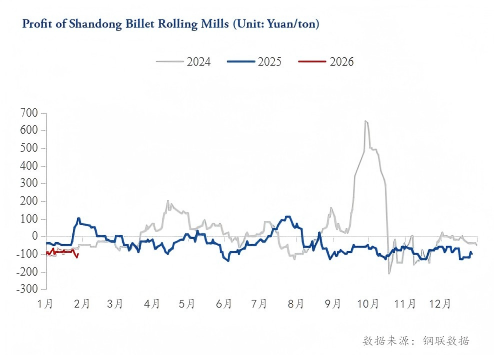
Shandong Tolling Mills: Profit fell to -100 yuan/ton (down 10 yuan/ton).
Jiangsu Tolling Mills: Profit dropped to 20 yuan/ton (down 40 yuan/ton).
Analysis: With downstream construction halting and demand turning sluggish, mill shipments have slowed. While billet costs rose, finished product prices stayed flat, pushing mill margins deeper below the break-even line.
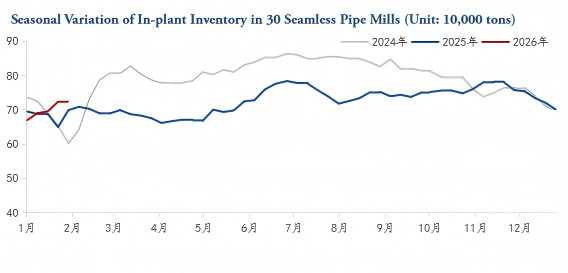
Raw material costs in East China saw a slight rebound (Shandong +20, Jiangsu +10), but mainstream mills kept ex-factory prices stable. Local market prices were flat. Notably, national production continued to decline, and mill inventories shifted from increasing to decreasing (down 1,600 tons), providing some relief to manufacturers. With the 9-day Lunar New Year break approaching, trading has nearly ground to a halt.
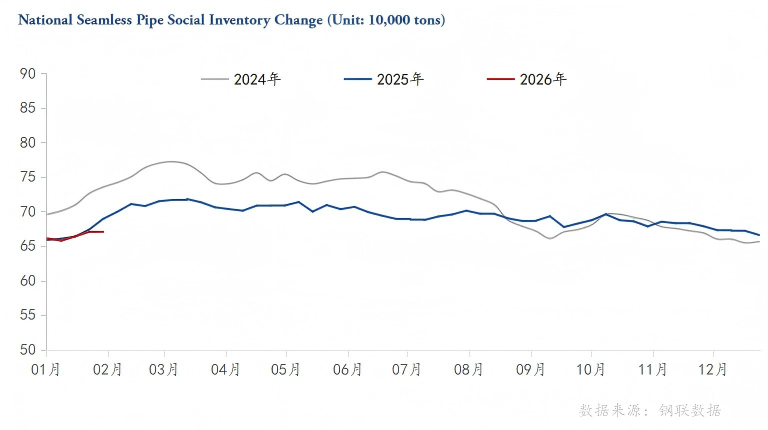
Social Inventory: Surveying 123 traders, social inventory stood at 669,900 tons (down a marginal 300 tons). While some "Winter Storage" activity has occurred, the overall market remains quiet. Inventory is expected to rise next week as holiday arrivals outpace near-zero sales.
Mill Inventory: Surveying 33 production enterprises, in-plant inventory fell to 721,600 tons (down 1,600 tons). As more mills begin holiday maintenance, mill stocks are expected to continue their slight decline.
Output: Weekly production was 352,000 tons, down 3,400 tons week-on-week.
Capacity Utilization: Fell to 70.59% (down 0.68%).
Operating Rate: Dropped to 70.3% (down 1.98%). Output is trending downward as mainstream mills enter their scheduled maintenance periods for the festive season.
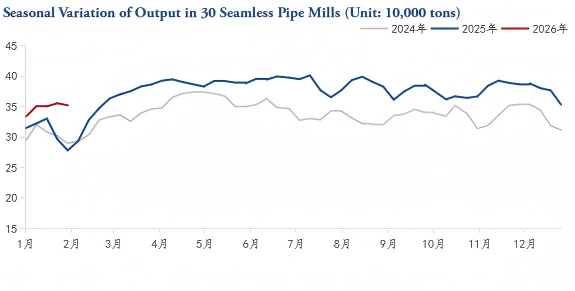
The market is currently entering the "Price without Market" phase typical of the pre-holiday period:
Cost Support: Rising billet prices and the central bank's signals of further monetary easing provide a firm floor, discouraging mills from lowering prices.
Supply & Demand: Both sides are at a low ebb. While Winter Storage policies are being released and traders are making small-scale purchases, the actual turnover is minimal.
Sentiment: With the record-long 9-day holiday (Feb 15–23) looming, market participants are shifting focus to capital safety and holiday logistics rather than price speculation.
Conclusion: Given the stable cost support and the seasonal standstill in demand, national seamless pipe prices are expected to remain stable next week.