en
en 
Call
+8613406350006


Overview:
Throughout 2025, the steel industry has faced multiple challenges, including quantitative reduction, quality improvement, structural adjustments, weakening prices, and mounting cost pressures. The steel pipe sector has similarly entered a dilemma where prices face significant pressure, making it difficult to rise or fall significantly. Key questions dominate the current market sentiment: Can the enthusiasm for "winter stockpiling" be ignited? Will terminal demand increase due to the end-of-year rush? When will steel pipe prices rebound? With these questions in mind, the following report provides a brief analysis of the current situation.
Market Dynamics and Cost SupportRecently, the linkage between futures and spot prices in the black industrial chain has been obvious, driven by a combination of policy factors, fundamentals, financial capital, and market sentiment. As of now, bearish factors have been fully reflected in the trading panel. Spot prices have reached the vicinity of steel mill production costs, and the phenomenon of profit inversion for various spot resources and direct-delivery resources has increased. Notably, billet manufacturers still maintain a sentiment of price protection, providing some support at the bottom, although overall market transactions remain ordinary.
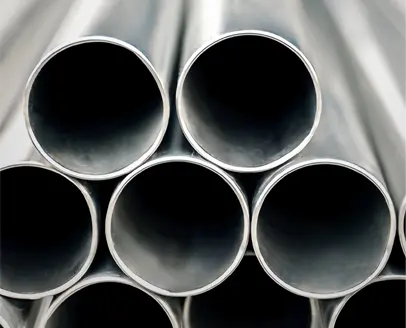
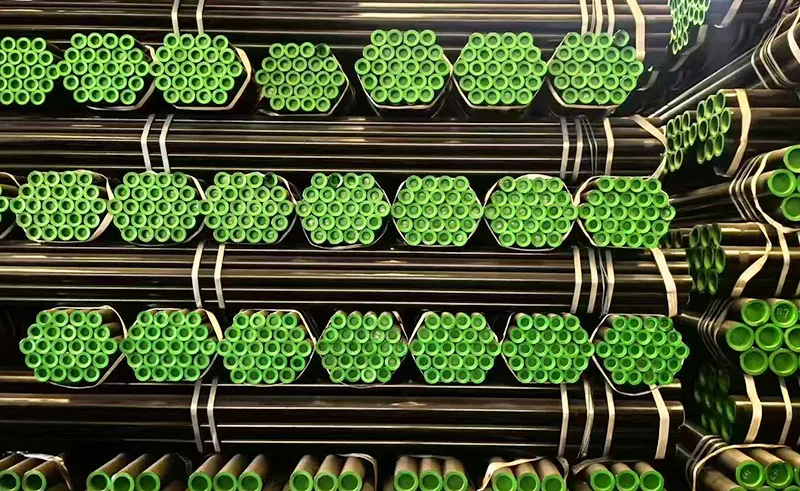
Current Price Data and LogisticsAccording to Mysteel survey statistics, as of December 6, the national average prices for 4-inch*3.75mm welded pipe and galvanized pipe were reported at 3,565 yuan/ton and 4,171 yuan/ton, respectively. Compared to the same period last month, these represent decreases of 14 yuan/ton and 7 yuan/ton. Additionally, due to the recent downward adjustment in domestic refined oil prices, transportation costs have followed suit. Although the decline is not large, transport costs in different cities have reduced by approximately 3-8 yuan/ton.
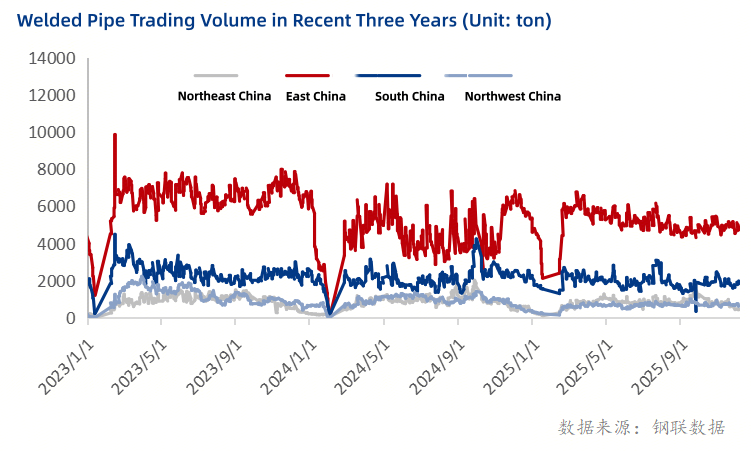
Profit Margins and Market SentimentBased on calculations considering other operating costs for pipe mills and traders, the profit margins for both groups have decreased year-on-year and are below the levels seen in the same period last year. Influenced by the mentality of "buying on the rise, not on the fall," customers have a strong wait-and-see attitude. Superimposed with continuous cooling weather, the characteristics of the off-peak demand season in the Northeast and Northwest regions have become increasingly obvious, and downstream construction sites are slowing down. Therefore, it is expected that the probability of steel pipe prices continuing to rise in the near term is low, and prices may usher in a correction starting in late December.
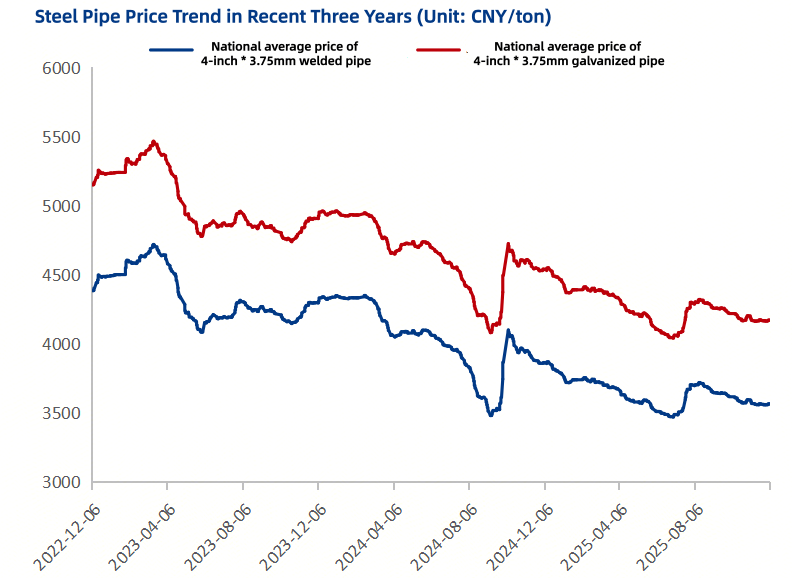
Seasonal Demand DeclineThe reduction in seasonal demand is the main cause of current price fluctuations. Low temperatures in the Northeast have caused outdoor construction to stagnate, leading downstream procurement to focus on "as-needed" purchases while reducing large-scale stocking. Market transactions are not smooth, and price increases lack momentum. To promote transaction volume, traders mostly focus on stabilizing prices for shipments. While pipe mills have slightly raised ex-factory prices, traders' willingness to follow the rise is not strong; however, when mills lower prices, traders follow the decline quite timely.
Impact of Real Estate and InfrastructureBecause previous real estate development relief actions have been tepid, projects such as fire protection infrastructure have decreased, impacting steel pipe procurement. To reduce costs, some procurement plans that were originally scheduled have also been slowed down.
Winter Stockpiling DynamicsCurrently, due to the strategic distribution of major pipe factories across various regions and increased logistics speeds, the market has not yet seen significant movement regarding "winter stockpiling" policies. However, according to tradition, it is not ruled out that traders will choose to appropriately replenish stock before the year-end, especially for incomplete specifications where market borrowing is frequent. Superimposed with year-end contracts, some steel pipe traders are reducing warehouse scale or moving to areas with lower rents to lower operating costs. It is expected that social inventory may increase slightly after late December in preparation for winter stockpiling.
Statistical Data OverviewAccording to data released by the National Bureau of Statistics, from January to October 2025, national fixed asset investment was 40.8914 trillion yuan, a year-on-year decrease of 1.7%. The housing construction area of real estate development enterprises decreased by 9.4% year-on-year. Among them, residential construction area decreased by 9.7%, new housing start area decreased by 19.8%, and new residential start area decreased by 19.3%.
Policy OutlookAlthough the dual decline in fixed investment and real estate puts pressure on steel pipe operations, the state adheres to the general tone of seeking progress while maintaining stability. The general direction of stabilizing employment, enterprises, the market, and expectations remains unchanged. As a pillar industry, the real estate sector is being supported by relevant departments through a series of policy measures to meet housing needs, increase the supply of high-quality housing, optimize financing mechanisms, and lower purchase thresholds. After repeatedly probing the bottom without exiting the downward cycle, the real estate market is expected to gradually "stop falling and stabilize," thereby driving a recovery in steel pipe demand.
Bullish Factors:
As pipe mills approach the winter stockpiling period, enterprises that did not purchase earlier will conduct appropriate procurement to replenish missing specifications.
Following past practices, "winter stockpiling policies" are likely to be issued, prompting traders to replenish stock at low price levels.
With the implementation of macro policies, economic growth is expected to become effectively prominent.
Bearish Factors:
Steel pipe demand is currently in the off-season, weakening demand and providing insufficient momentum for price increases.
Prices of related black series raw materials (coking coal, coke, iron ore) remain high, keeping steel mill costs on the edge of profit and loss, resulting in low overall economic efficiency.
Approaching the end of the year, the primary task for some traders is the withdrawal of funds.
Final Verdict:Regardless of market changes, a significant sharp rise in short-term prices is difficult to support. It is even believed that upstream costs may continue to explore lower levels, leading to the possibility of lower prices. However, considering the slight increase in supply and the long-term hovering of mill capacity utilization at medium-to-low levels, whether demand can compensate in the short term remains to be verified by actual market performance. With continuous national policy adjustments, the long-term stable development of the economy is certain. The annual winter stockpiling is about to begin, but whether traders participate depends more on price points than on the winter timing itself.