en
en 

Call
+8613406350006


The recent military escalation initiated on February 28, 2026, involving the United States, Israel, and Iran, has sent shockwaves through global commodity markets. As the situation evolved into a maritime blockade of the Strait of Hormuz—a vital choke point for twenty percent of the world’s energy supply—the Chinese steel pipe industry has come under intense scrutiny regarding its exposure to the Middle East. However, a granular analysis of trade data from the last five years indicates that the direct impact on export volumes to Iran is remarkably contained.
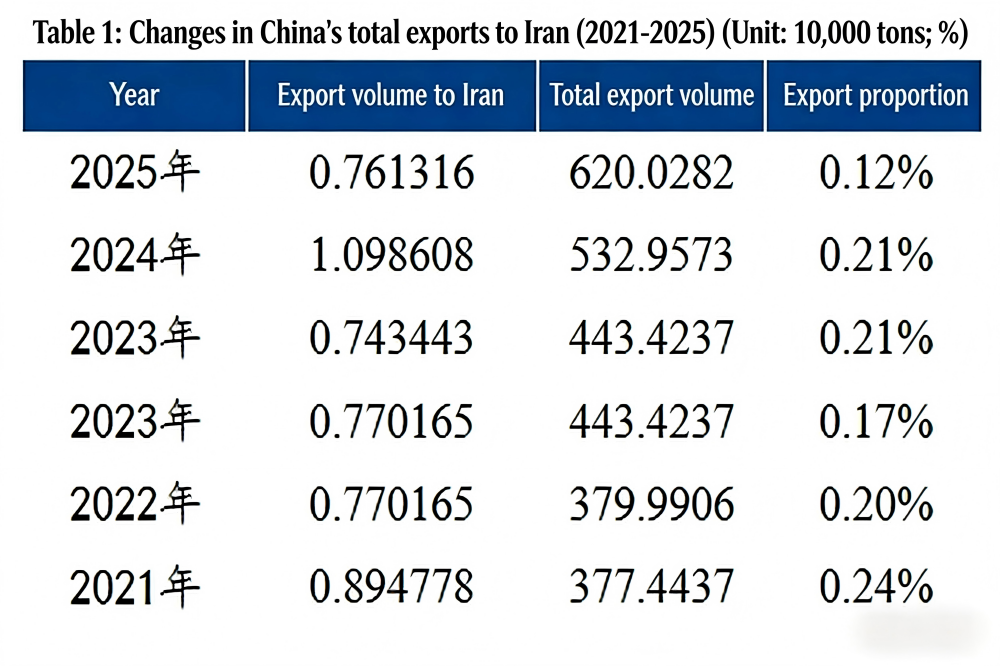
For the welded pipe sector, the direct exposure to the Iranian market remains negligible. In 2025, while Chinese welded pipe exports reached a ten-year peak, the specific volume destined for Iran was only 7,610 tons. this represented a mere 0.12 percent of the total export structure. Historically, Iran has not been a core destination for Chinese welded pipes, meaning the current military hostilities do not threaten the fundamental growth trajectory of this segment.
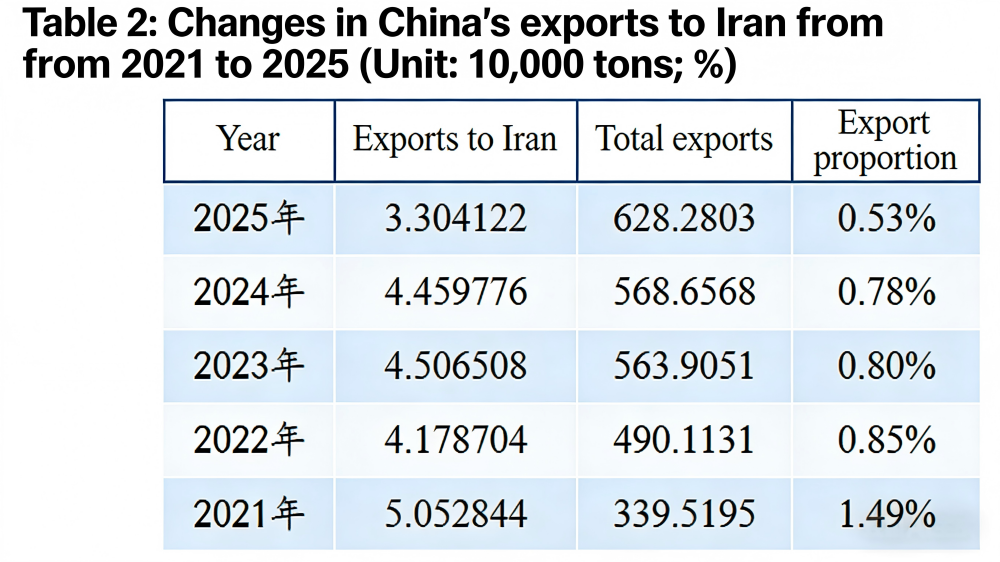
The seamless steel pipe segment tells a similar story of limited direct exposure. Despite hitting a record high of 6.28 million tons in total exports in 2025—a year-on-year growth of 9.79 percent—the Iranian share has consistently diminished over the last five years. In 2025, exports to Iran totaled 33,040 tons, accounting for just 0.53 percent of the total seamless pipe export volume.
The data confirms that the direct impact of the conflict on Chinese steel pipe exports is minimal and highly controllable. Iran is simply not a primary market for Chinese manufacturers. The broader industry trend of market diversification has successfully insulated Chinese exporters from the immediate fallout of the domestic Iranian economic disruption. The real pressure on the industry stems not from the Iranian border but from the logistical paralysis affecting the wider Persian Gulf.
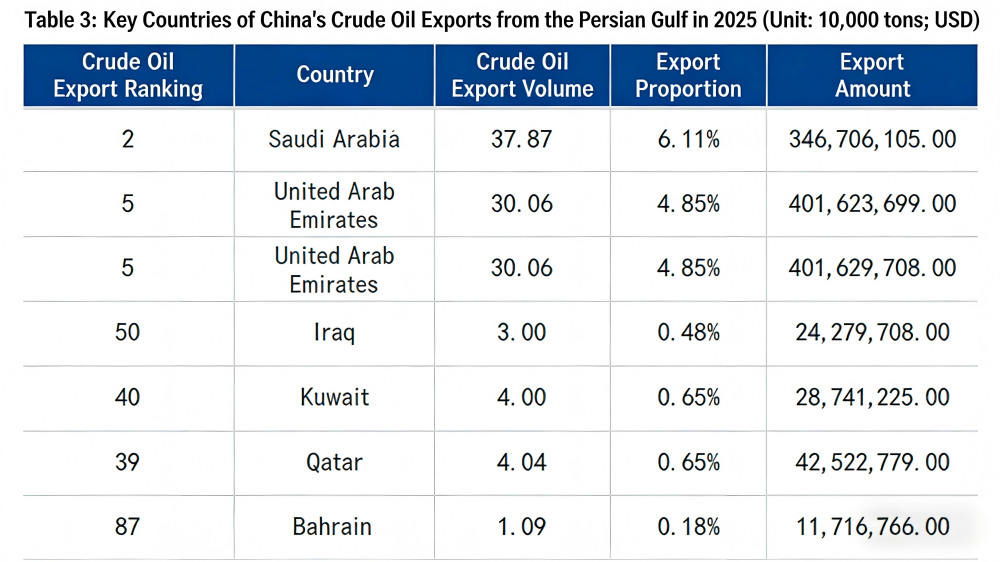
The true challenge for the Chinese steel pipe industry lies in the indirect impact caused by the closure of the Strait of Hormuz. This waterway is the lifeblood of the Persian Gulf, serving as the primary corridor for trade with Saudi Arabia, the United Arab Emirates, Iraq, Kuwait, Qatar, and Bahrain. For Chinese exporters, these nations represent critical high-growth markets where demand for energy-related steel products is concentrated.
The logistical blockade is projected to trigger a massive surge in maritime freight rates and a significant extension of shipping cycles. As vessels are forced to reroute around the Cape of Good Hope or wait for safe passage, the resulting supply chain delays will inevitably lead to increased delivery risks. For Chinese exporters, this translates into compressed profit margins as shipping costs rise and contract fulfillment becomes more complex.
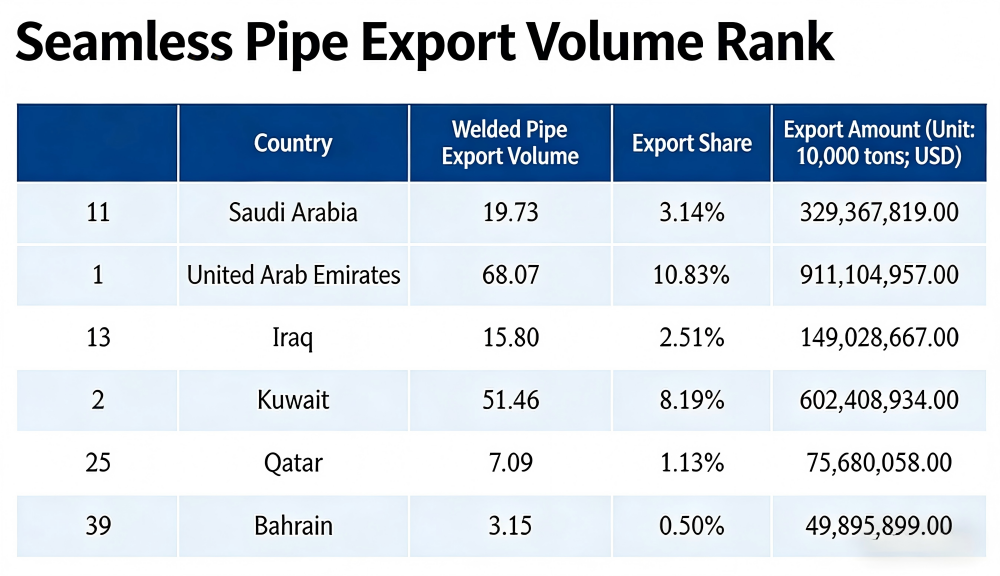
The indirect impact on the welded pipe market is particularly concentrated in Saudi Arabia and the United Arab Emirates. In 2025, these two nations alone imported 679,300 tons of Chinese welded pipes, representing approximately 11 percent of China’s total welded pipe exports. Any prolonged disruption to the Strait of Hormuz threatens the stability of these core markets, increasing the risk of order cancellations and logistical bottlenecks at a time when regional demand was expected to peak.
The seamless pipe sector faces even higher stakes in the Persian Gulf. In 2025, the six major Gulf nations—Saudi Arabia, the UAE, Iraq, Kuwait, Qatar, and Bahrain—accounted for a combined 1.653 million tons of Chinese seamless pipe exports. This represents 26.31 percent of China’s total seamless pipe exports, or more than one-quarter of the global total. The reliance on the Strait of Hormuz for these shipments means that the seamless pipe segment is the most vulnerable to the ongoing maritime blockade.
Beyond the Gulf, the ripple effects are expected to spill over into traditional transshipment hubs and radiating markets. Regions such as North and East Africa, the Red Sea coast, South Asia, and the Eastern Mediterranean rely on the stability of Gulf shipping lanes. A prolonged conflict will elevate global steel pipe trade costs and disrupt the established flow of goods into the European and South Asian markets, creating a wider global logistics crisis for the industry.
The current geopolitical crisis highlights the varying degrees of resilience between different steel pipe categories. While the overall demand for energy infrastructure in the Middle East remains robust, the ability to deliver these products is now the primary variable for market success. This has led to a strategic reassessment of the product mix and the competitive landscape for Chinese manufacturers.
Seamless pipes are significantly more affected by the conflict than welded pipes due to their essential role in oil and gas exploration and petrochemical projects. The high concentration of these projects in the Gulf region means that the seamless pipe sector is more deeply integrated into the local energy value chain. Consequently, any disruption to the transport corridor for oil country tubular goods (OCTG) and line pipes has a direct and severe impact on the execution of energy projects in the Middle East.
The pressure on the industry is primarily localized in the logistics sector rather than a collapse in regional demand. Unlike traditional economic recessions where demand evaporates, the current situation is one of "demand without access." Middle Eastern infrastructure projects still require steel pipes for their continued development, but the inability to guarantee port arrivals and the escalation of insurance premiums are hindering the competitive advantage of Chinese exports.
The conflict may accelerate a structural shift toward the "regionalization" of the supply chain. If the Strait of Hormuz remains blocked for an extended period, Chinese manufacturers may need to explore alternative land-based logistics routes or increase their focus on markets that are not dependent on Gulf transit, such as Southeast Asia and Central Asia. This could lead to a temporary cooling of the Middle Eastern market while other regions see a surge in Chinese export interest.
The long-term impact will depend on the duration of the blockade and the response of the global shipping industry. For now, the primary strategy for Chinese exporters is to mitigate logistical risk through enhanced contract flexibility and the use of diversified shipping lanes where possible. The industry's ability to navigate this "logistics-first" crisis will determine its profitability and market share in the second half of 2026.
As the US-Iran-Israel conflict continues to unfold, the Chinese steel pipe industry must prepare for a period of heightened volatility and increased operational costs. While the direct loss of the Iranian market is a minor concern, the protection of the wider Middle Eastern market share and the management of global logistics are of paramount importance.
Manufacturers and traders are advised to closely monitor freight rate fluctuations and the availability of vessel space. Securing long-term shipping contracts or exploring "FOB" pricing models may help transfer some of the logistical risk to the buyers. Additionally, firms must be prepared for the possibility of "force majeure" declarations if shipments cannot reach Gulf ports due to military activity or the continued blockade.
The "fifteenth five-year plan" period (2026–2030) remains a critical timeframe for Chinese high-end manufacturing. Despite the current geopolitical headwinds, the focus remains on upgrading the quality of exports. The current crisis may serve as a catalyst for manufacturers to accelerate the development of high-value-added pipes that can better absorb the increased costs of global shipping and insurance.
The resilience of the Chinese steel pipe export engine is expected to hold, provided that the industry can adapt to the "New Normal" of maritime insecurity. While 2026 will undoubtedly be a year of transition and logistical challenge, the fundamental competitive advantages of Chinese steel pipes—scale, cost-efficiency, and technological parity—remain intact.
In summary, the industry is facing a logistical hurdle rather than a demand-side catastrophe. By focusing on supply chain flexibility and diversifying export destinations, Chinese steel pipe enterprises can weather the storm of Middle Eastern instability. The market remains watchful, waiting for a resolution to the Hormuz blockade that would allow for a return to the record-breaking export levels seen in 2025.