en
en 




Call
+8613406350006


Since the onset of winter, temperatures have gradually declined, compounding issues such as insufficient capital availability downstream and low turnover efficiency. Consequently, construction progress has been restricted, leading to a continuous contraction in withdrawal volumes. The welded pipe market has exhibited a clear weakness with a quiet trading atmosphere. While raw material prices have loosened, pipe mill prices remain relatively firm. Although mill profits have improved, producers remain in a loss-making state, keeping ex-factory prices high. This has trapped traders in a difficult dilemma characterized by high upstream costs and weak downstream demand.
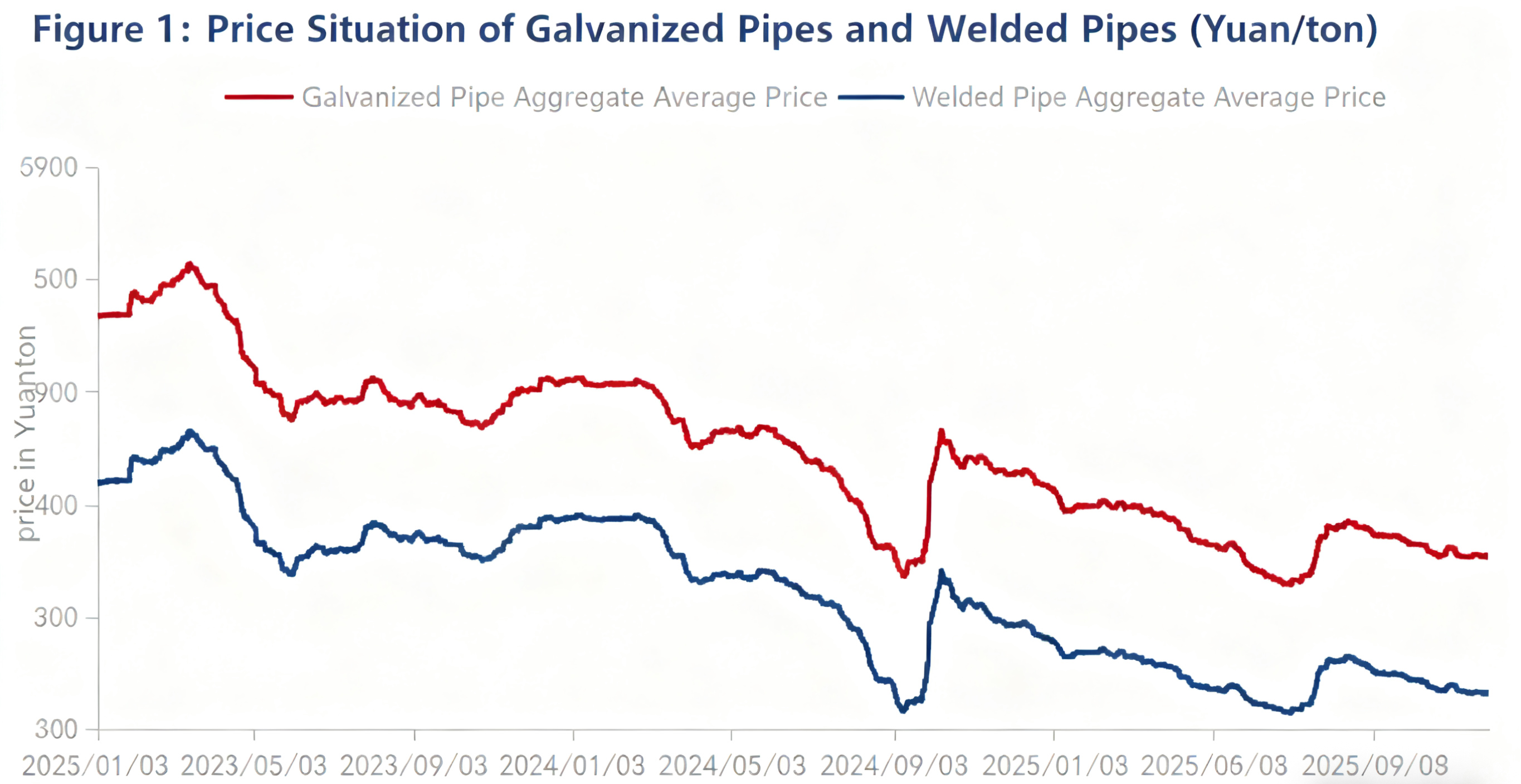
In November, the domestic welded pipe market price generally followed a downward trajectory, with insufficient demand support leading to intensified price volatility. Specifically, the national average price of galvanized pipe in October was 4,189 yuan/ton, dropping to 4,170 yuan/ton in November, a month-on-month decrease of 19 yuan/ton. Compared to the national average of 4,576 yuan/ton in November 2024, this represents a significant year-on-year drop of 407 yuan/ton. Similarly, the national average price of welded pipe was 3,588 yuan/ton in October, falling to 3,566 yuan/ton in November, a month-on-month decrease of 22 yuan/ton and a year-on-year drop of 342 yuan/ton compared to November 2024. This downward price trend fully reflects the persistent contradiction between supply and demand in the current market, confirming that the pattern of sluggish transactions has not been effectively improved.
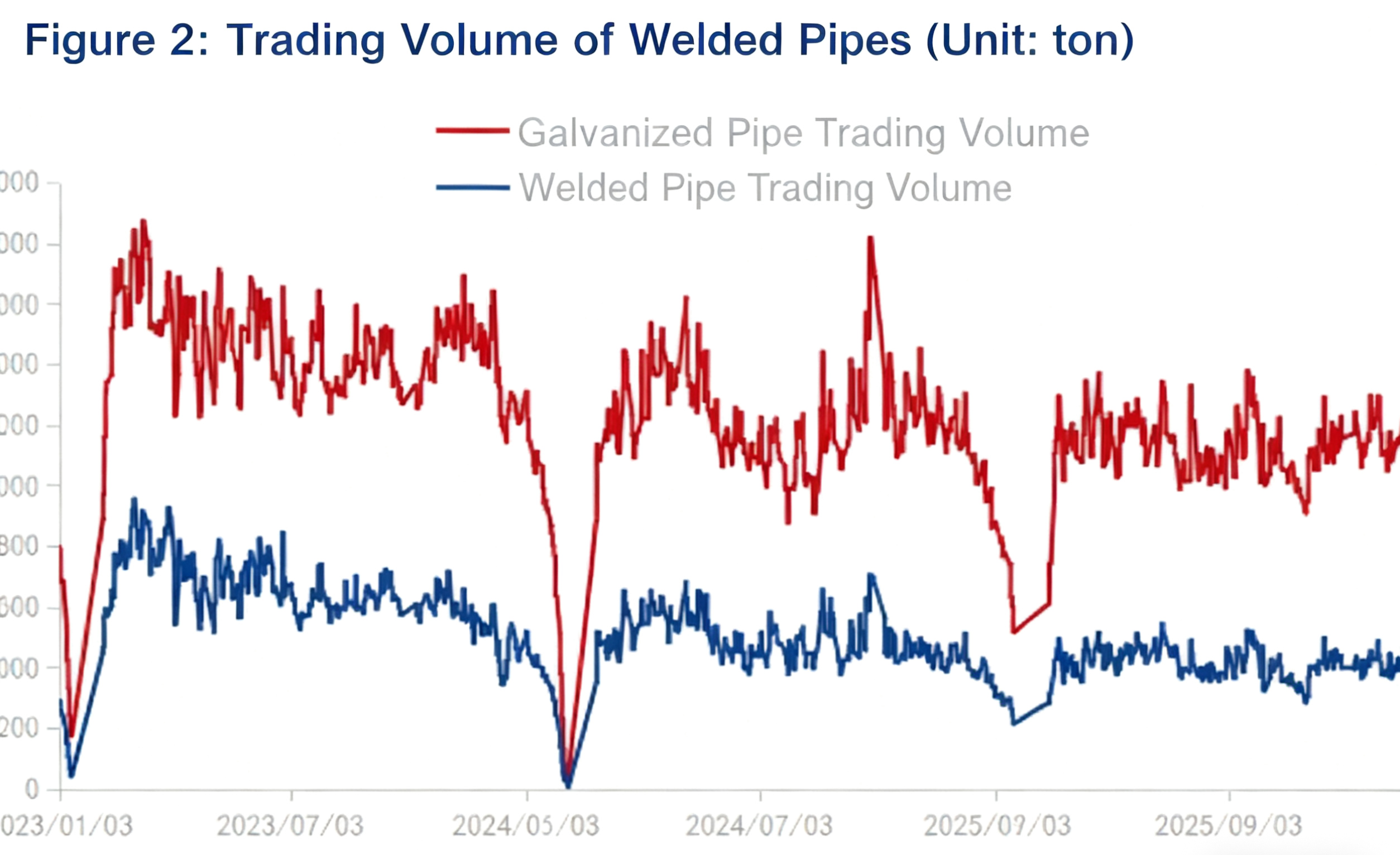
Over the past month, transactions in the domestic steel pipe market have weakened overall. Universal price declines across regions have significantly increased shipping pressure on traders. Affected by the National Day holiday in October, welded pipe transaction volume was 213,000 tons. In November, the national transaction volume for galvanized pipes was 212,000 tons, remaining basically flat compared to the previous month. The trading atmosphere in various local markets remains cold. Traders have largely adopted a strategy of purchasing on demand and prioritizing quick turnover. The contraction of demand during the off-peak season has further exacerbated the supply-demand contradiction, making it difficult to alter the sluggish transaction trend in the short term.
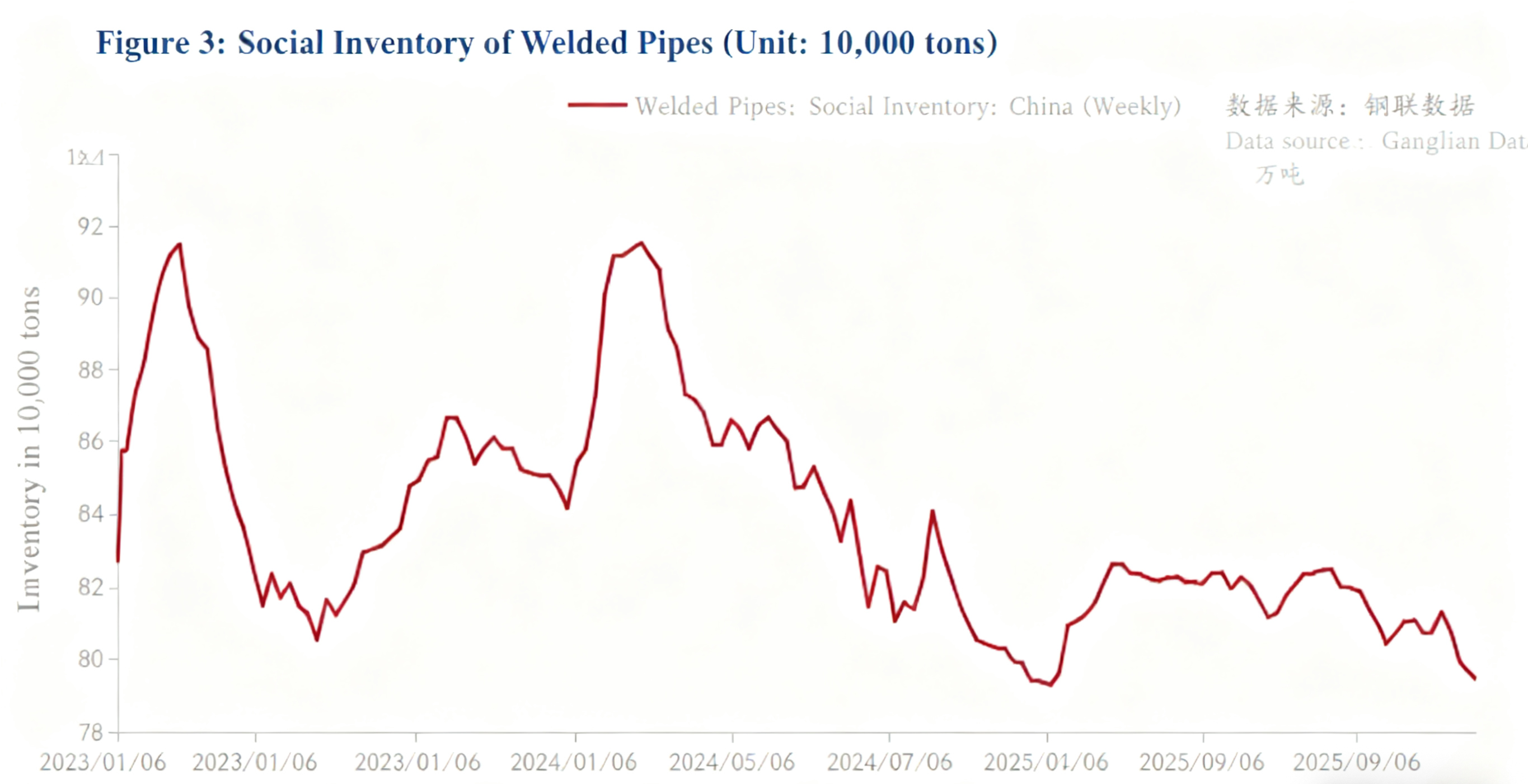
At the same time, while the overall social inventory of welded pipes in the fourth quarter showed a downward trend, regional differentiation was obvious. In North China, inventory in Beijing dropped from 14,200 tons in early October to 13,800 tons by the end of November. In the Northeast, Shenyang's inventory plummeted to 12,600 tons in mid-November before stabilizing. In East China, Shanghai's inventory initially fell before rising to 44,800 tons. These shifts reflect intensified gaming between supply and demand. Superimposed with the downturn in real estate, weak infrastructure demand, and terminal procurement strictly based on immediate needs, the market sentiment index dropped by 29.91% in a single week. Traders hold pessimistic expectations for the market outlook, with some merchants choosing to reduce inventory to mitigate risk. It is expected that steel pipe market inventory may decline slightly in December. While supply contraction may provide some bottom support, the lack of clear demand recovery signals limits the upside potential for prices.
Expectations for macro policies in December are tending towards flat, and the market will likely be dominated by the industry's own internal logic. From the perspective of the domestic policy environment, the GDP growth rate in the fourth quarter only needs to reach 4.6% to achieve the full-year growth target of 5%. Therefore, the necessity for introducing strong economic stimulus policies is low, and the macro level is unlikely to provide strong upward momentum. Internationally, the Federal Reserve has indicated that current economic activity and consumer spending have weakened further, raising the market's expectation probability for an interest rate cut to 80%.
From the raw material perspective, coking coal may face downward pressure due to supply guarantee policies. However, iron ore imports are expected to increase slightly in December. Subsequently, as steel mills enter the winter storage phase, there may be restocking demand, which will form certain support for prices. Influenced by this, pipe mill prices may find support within the year. The room for a decline in ex-factory prices for steel pipes is limited, suggesting that the downward space for market prices is also restricted.
Conclusion
In summary, the domestic steel pipe market in November presented a pattern of declining prices, sluggish demand, and differentiated inventory. The persistent contradiction between supply and demand has become the core storyline of the market. On the price side, both galvanized pipes and welded pipes saw significant month-on-month and year-on-year declines, and the sluggish transaction trend has not been effectively alleviated. On the demand side, the downturn in real estate and insufficient infrastructure demand formed a double drag. The cautious operation of traders purchasing only on demand and moving goods quickly further aggravated the market's wait-and-see sentiment, while regional inventory differentiation reflected the ongoing game between supply and demand.
Looking ahead to December, the macro policy level lacks strong stimulus support, and the market will largely run based on industry logic. The warming expectation of international interest rate cuts and domestic demand for winter restocking of raw materials will form certain support, potentially limiting the downward space for steel pipe prices. However, the strength of the bottom support from supply contraction still depends on signals of demand recovery. In the short term, the market will remain in an adjustment phase characterized by weak demand, low inventory, and narrow fluctuations. Traders need to continuously monitor raw material price fluctuations, policy orientations, and marginal changes in terminal demand, reasonably adjusting inventory and pricing strategies to cope with the risks brought by market uncertainty.