en
en 

Call
+8613406350006


Summary: The current steel market is at a critical juncture. On one hand, steel prices have deeply corrected to yearly lows, largely hitting mill cost lines, which constructs a relatively safe floor. On the other hand, high inventory, dragged down by weak demand, continues to suppress the space for any price rebound. Simultaneously, the market is entering a macroeconomic policy window, where the repeated tug-of-war between "weak reality" and "strong expectation" is playing out. Against this backdrop, the direction and strength of macroeconomic policies will be the key variables needed to break the current deadlock and determine the future trajectory of steel prices.
After a brief recovery in July, steel prices continued to fluctuate and probe for a bottom from August to October, now once again nearing the low levels seen since the beginning of the year.
Current Price Level: Taking the Shanghai market as an example, as of October 20, 2025, the rebar spot price has fallen by 5.8% compared to the beginning of the year, and the hot-rolled coil spot price has dropped by 4.6%. Both are only about 100 yuan/ton away from their lowest points of the year.
Safety Floor: The current relatively low steel price provides a good psychological safety margin for the market. This means that the bearish factors from the weak reality have been largely priced in by the market. As long as expectation management is handled well and the cost structure does not collapse, even if the post-market macro performance falls short of expectations, steel prices are unlikely to suffer further significant downward breaches.
Profit Plunge: More critically, the prices of black finished steel products have generally hit the cost line, and mill profitability has rapidly deteriorated. Data shows that the latest national mainstream sample steel mills are, on average, losing 86 yuan per ton on steel billet. Electric arc furnace operations during off-peak hours are reporting an average loss of -163 yuan/ton. The average profit for blast furnace rebar is -67 yuan/ton, and hot-rolled coil production profit is only around 50 yuan/ton.
Mill Stance: However, the current losses at steel mills are not enough to drive large-scale production cuts. At the same time, coking coal, which is the most resilient black commodity recently, is unlikely to concede profits to steel mills again in the short term. Against this backdrop, steel mills' willingness to hold prices firm against downstream buyers is likely to gradually strengthen.

Despite the contraction in mill profits, steel supply continues to be maintained at high levels.
Supply Persistence: Mysteel estimates that the daily output of pig iron, averaging 2.4 million tons, will persist in the short term. This is due to factors such as mills maintaining market share, ensuring employment, securing bank credit support, and the high cost of starting and stopping blast furnaces. Furthermore, some steel varieties are still profitable, and pig iron tends to flow toward these relatively profitable products. Consequently, the willingness and impetus for mills to voluntarily undertake large-scale production cuts are clearly insufficient.
Weak Demand: The demand side remains generally weak. Even though it is the traditional peak season of "Golden October," the downward trend in real estate has not reversed, domestic fixed investment has slowed down, and insufficient project funding has resulted in "a peak season that is not booming" for domestic demand.
Export Slowdown: Simultaneously, while steel exports maintain year-on-year growth, they have shown a month-on-month decline. With high overseas tariff barriers, it will be difficult for steel exports to maintain high growth. Customs data shows that in September 2025, the total domestic steel billet exports were 1.4936 million tons, a month-on-month decrease of 15.34% but a year-on-year increase of 41.85%. China exported 6.4 million tons of steel plate products, a year-on-year decrease of 6.1%.
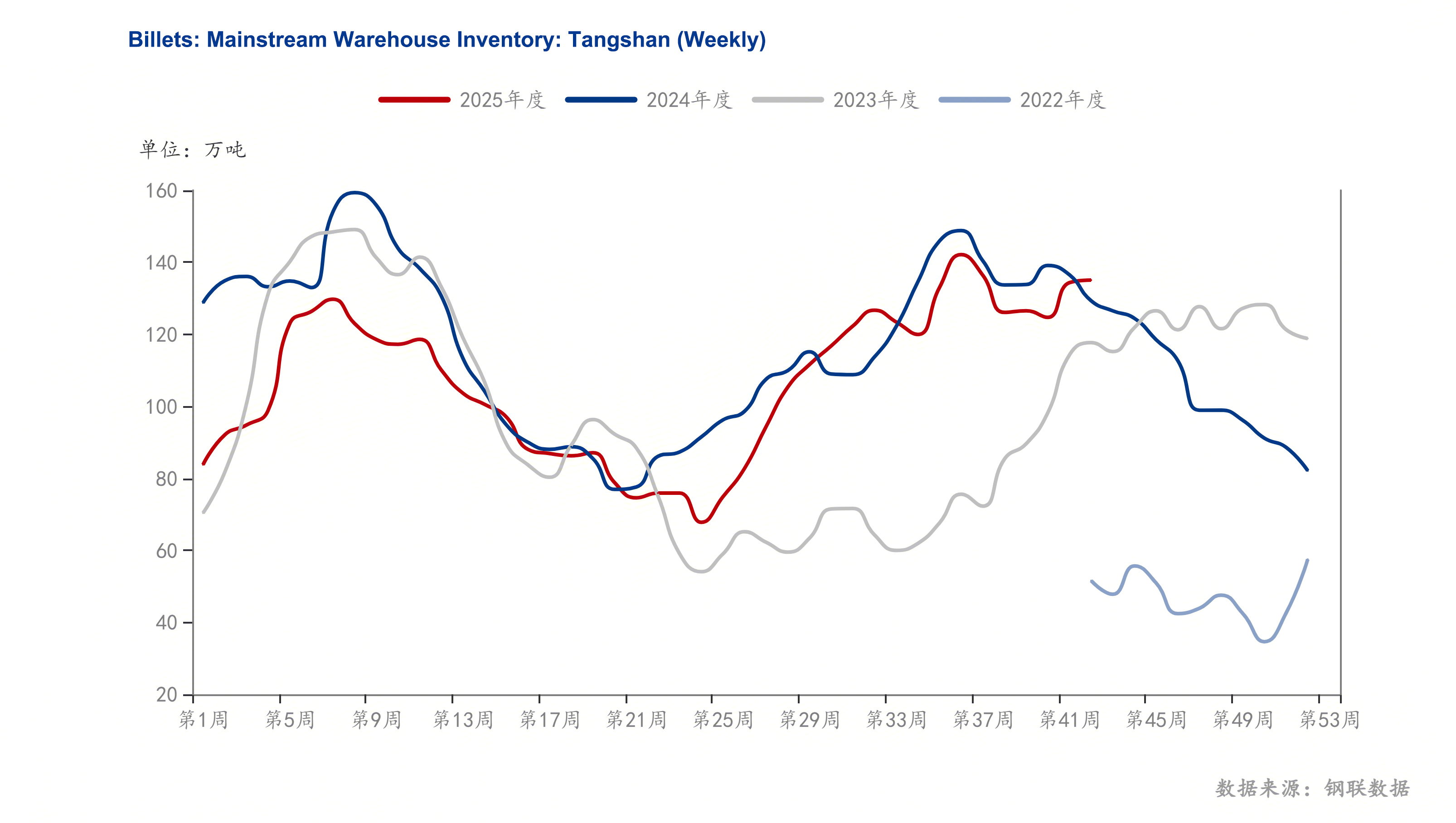
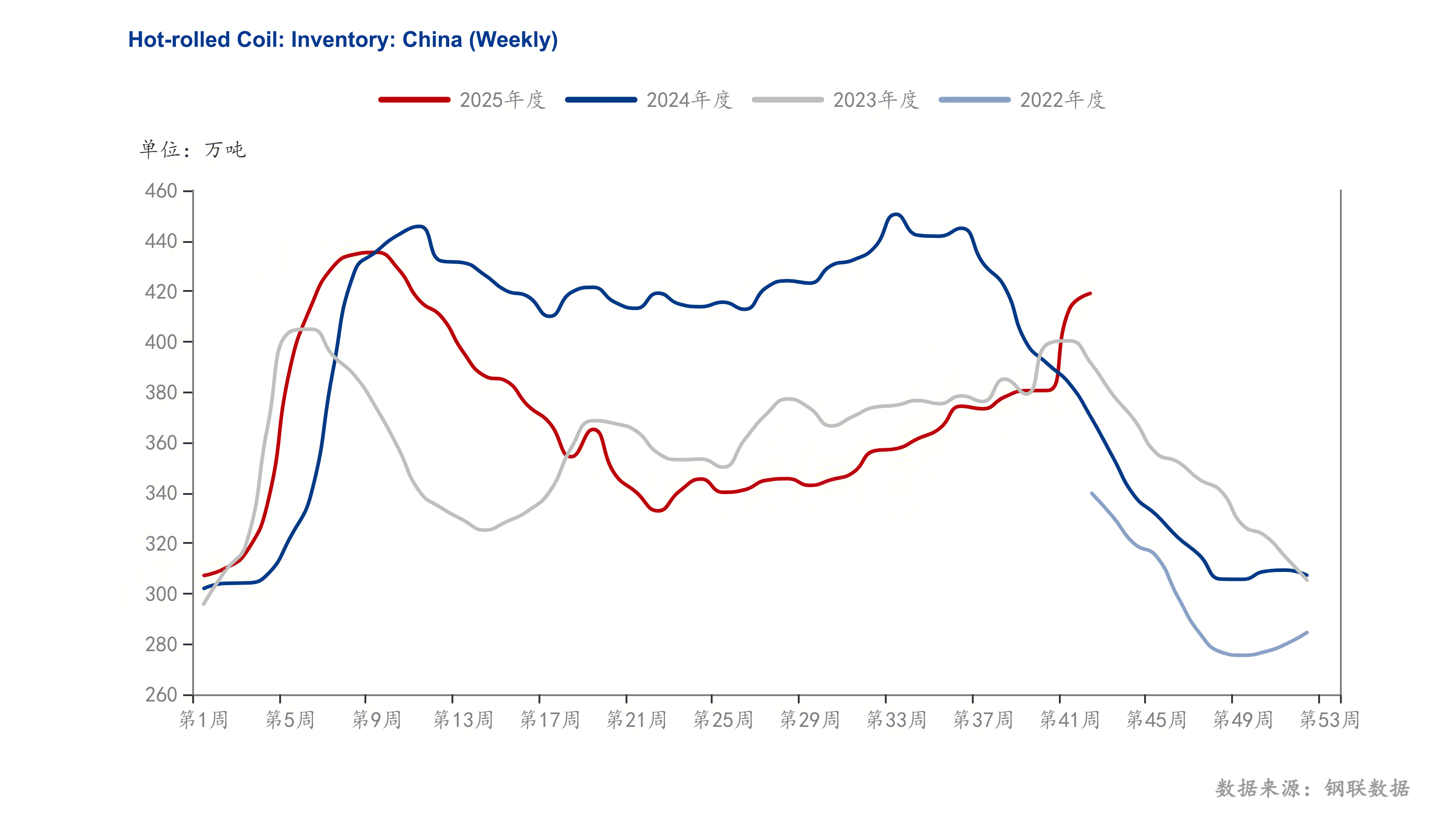
Inventory Pressure: The direct consequence of strong supply and weak demand is the continuous accumulation of inventory. Stocks of steel billet, hot-rolled coil, and strip steel continue to climb, indicating that current domestic downstream and export demand is unable to effectively digest the increasing supply. High inventory ensures that any price rebound will face significant pressure from hedging activities and spot selli
Although the current steel market fundamentals remain under pressure, the market is entering a concentrated window for macroeconomic policies, which will be the core factor guiding the market's direction. There are three key expectations for the future market:
Domestic Stimulus: The convening of important domestic meetings, with the market anticipating stronger policies for stable growth, particularly concerning fiscal policy and the industrial-side "anti-involution" policies.
Fed Rate Cut: The U.S. Federal Reserve is scheduled to hold a Federal Open Market Committee (FOMC) meeting from October 28 to 29 to decide whether to cut interest rates again. Even with the current "data vacuum" in the U.S., a series of recent statements by Fed officials have led to a general market expectation that the Fed will continue to lower the benchmark interest rate by 25 basis points. Furthermore, the Fed's long-term balance sheet reduction plan may be nearing its end, suggesting greater scope for monetary policy imagination.
Sino-US Trade Relations: There is an expectation of a gradual easing in Sino-US trade relations. This is particularly relevant after the widespread market concern caused by the news on October 10 that the U.S. planned to impose additional tariffs on certain Chinese goods. The renewed contact and talks between China and the U.S. significantly enhance the expectation of trade relations easing. The outcome of the potential meeting between China and the U.S. at the APEC conference in South Korea later this month is a key market expectation and will likely be the core factor in asset price volatility during this period.
In conclusion, current steel prices have adjusted to a relatively low level. While steel market fundamentals remain under pressure, the downside risk for steel prices is relatively limited before key macro events are implemented, with a high probability of maintaining a weak volatile pattern. The market is prone to seeing a corrective rebound when macro positives emerge, with the magnitude of the rebound depending on the macroeconomic performance. If macro performance falls short of expectations, the risks of "weak reality" and "negative feedback" will once again dominate the market, and steel prices may continue downward to test lower cost support levels.