en
en 
Call
+8613166245535



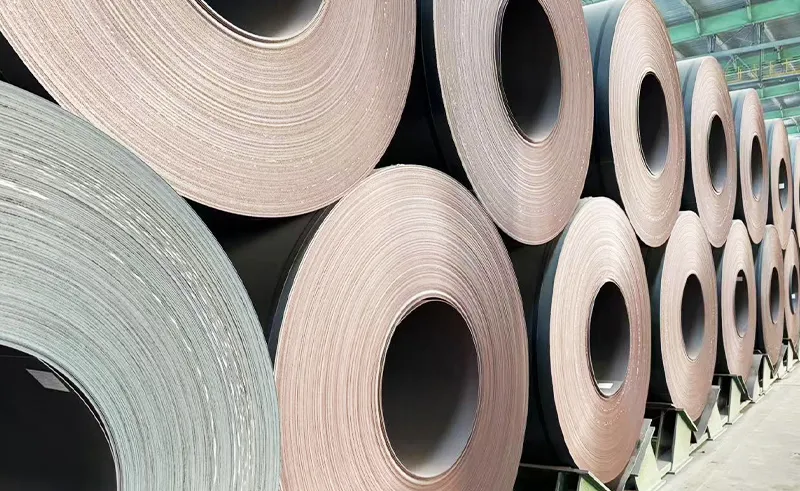
Silicon steel, also known as electrical steel, is a specialized ferritic alloy of iron and silicon, widely used for its magnetic properties in motors and transformers. Containing 0.5%-4.5% silicon by weight and less than 0.08% carbon, silicon steel enhances magnetic softness and electrical resistivity. Available in two forms—grain-oriented (GO) and non-oriented (NGO)—it is essential in the efficient generation, distribution, and consumption of electricity. Applications include motors, transformers, wind turbines, and electrical appliances.
| Standard | ASTM / JIS / DIN / GB / GOST / EN |
| Grade | - USA (ASTM): ASTM A876, ASTM M-15, M-19, M-22, M-27 |
| - China (GB): GB 50W470, GB 50W400, GB 35W300, GB 35W250 | |
| - Japan (JIS): JIS 50C470, JIS 50C400, JIS 35C300 | |
| - EU (EN): EN M400-50A, EN M350-50A, EN M270-35A, EN M250-35A | |
| Material | - Non-Oriented Silicon Steel (NOES): Grades are classified by maximum core loss (e.g., 35W250) and thickness. |
| Sizes | Thickness: 0.35mm, 0.50mm, 0.65mm |
| Width: 600-1250mm |
Excellent core material for efficient electromagnetic induction.
Reduces energy waste in alternating magnetic fields.
1. Electric Motors: Laminations in motors and generators.
2. Power Transformers: Transformer cores and magnetic cores.